

Outsmart Disruption with AI: Three Strategies for Supply Chain Resilience
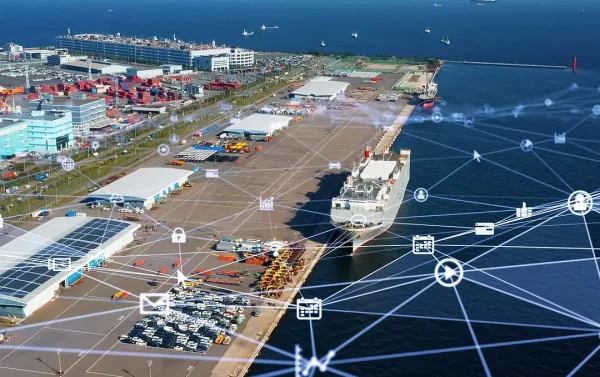
Today’s supply chain leaders are faced with a complex and tangled web of issues, but fortunately, AI holds the key to navigating this fast-paced landscape with ease.
For more detailed tracking and status information, sign in or contact your local Sino SCS representative for access.
Today’s supply chain leaders are faced with a complex and tangled web of issues, but fortunately, AI holds the key to navigating this fast-paced landscape with ease.
Artificial intelligence is widely touted as offering manufacturing and distribution organizations the agility and visibility that legacy systems no longer provide, but many deployments stall before reaching scale.
The trucking industry is undergoing one of its most pivotal shifts in decades. Between market volatility, rapid advances in automation and rising customer expectations, transportation leaders are being forced to rethink legacy systems and outdated ways of operating.
Delivery driver experience can be significantly enhanced with generative artificial intelligence (GenAI) techniques, particularly where traditional deep learning and machine learning (ML) technologies fall short. GenAI can determine the next, best position in…
Pallets are a necessity for the supply chain when it comes to moving goods, carrying everything from groceries and electronics to auto parts and pharmaceuticals. But behind the scenes, companies face a constant challenge: how to source, track, repair and recycle the millions of pallets that move through warehouses each day. That’s where pallet pooling comes in.
When it comes to arranging logistics, small and medium-sized enterprises are at a huge disadvantage: They pay substantially more for identical shipping services compared to Fortune 500 companies, purely due to volume-based pricing structures.
The changes to global trade and supply chains driven by factors including technology and geopolitical risks are likely to persist over the long term, according to FedEx Corp. Chief Executive Officer Raj Subramaniam.
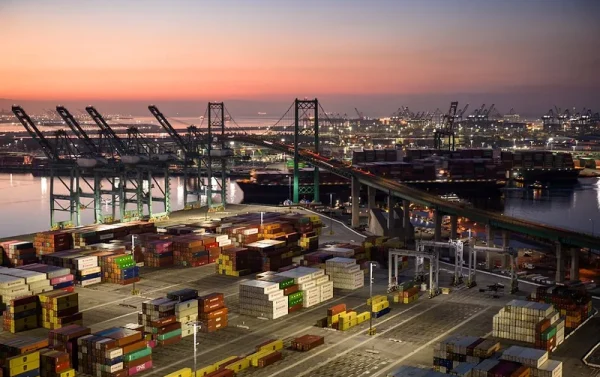
The Port of Los Angeles is on pace to process 10 million twenty-foot equivalent units (TEUs) in 2025, which would be just the third time the shipping hub has reached that benchmark in the course of a year.
The Panama Canal Authority is offering shippers a more flexible system for booking passage through the waterway so that customers can better align transit with changing market conditions.
Every year, trillions of dollars’ worth of goods move through global trade routes that rely on container shipping. Yet despite its central role, the industry still relies on paper-based systems to manage a surprising number of processes.